
Our Method
Three stages. Zero guesswork.
Each composting project we take on follows the same rigorous three-stage process — from the first site visit to daily operational management. No shortcuts. No failures.
Initial Site Visit
We begin with a thorough site visit to your society to understand your current situation. This visit covers:
Step 1
Assess the segregation level of the waste currently being generated.
Step 2
Calculate the current waste processing system capacity and identify any shortfall.
Step 3
Identify the area available for waste processing if no system currently exists.
Step 4
Meet the managing committee to understand concerns, budget constraints, and history with waste processing.
Detailed Proposal
Based on the site visit, we provide an in-depth proposal including a Capacity Planning and working proposal tailored to your society. This includes:
Shredding Machine
5–10 days
A shredding machine increases processing capacity by reducing the volume of wet waste. We recommend and source the right capacity shredder.
Vegetable Crate System
10–12 days
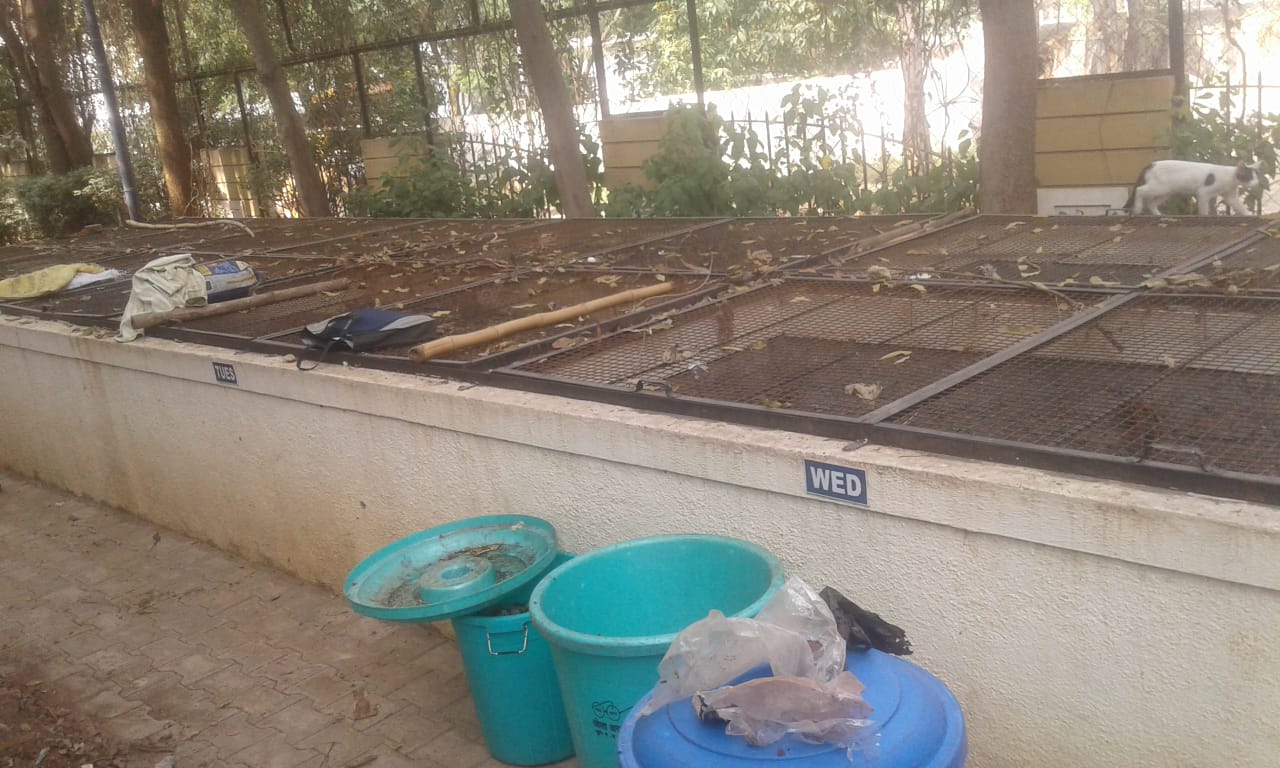
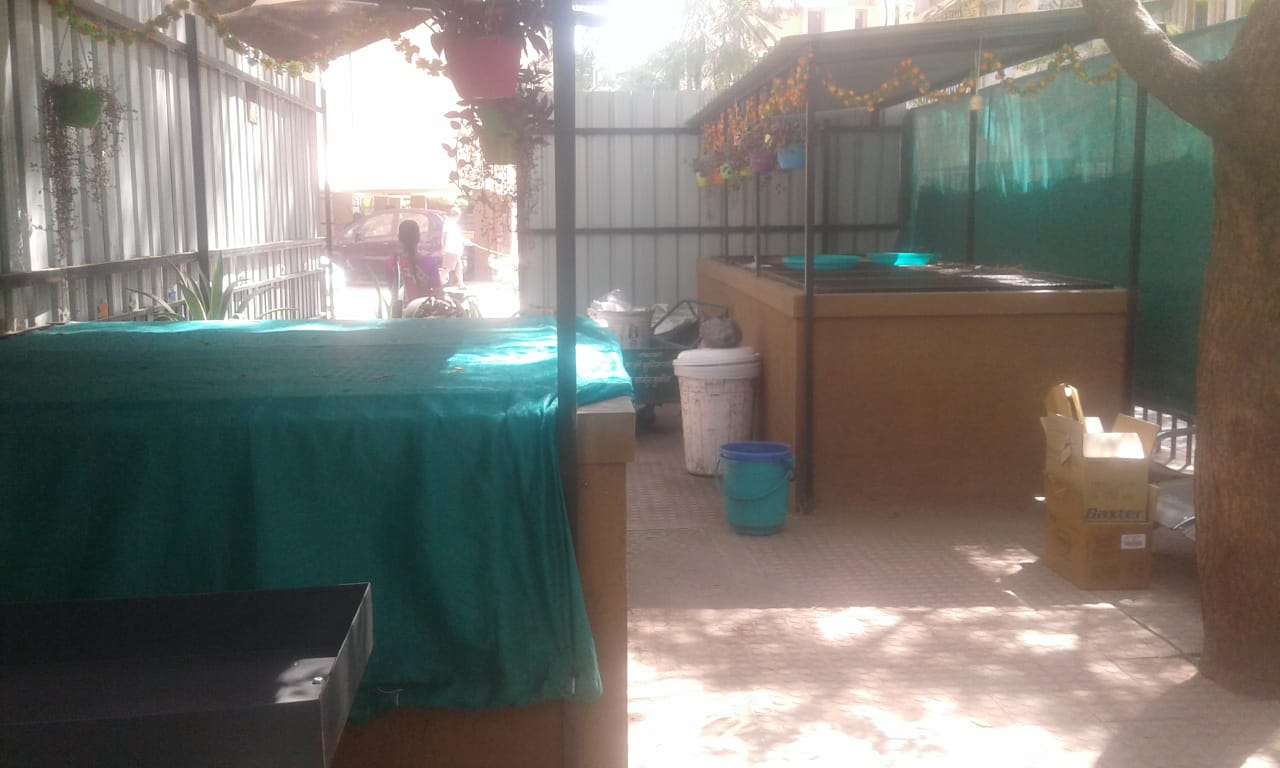
Vegetable crates used for composting along with a shredding machine and compost curing pits — effective and low-cost for medium-sized societies.
Layout Planning
~2 days
A detailed processing drawing showing the arrangement of pits, machines, and flow of waste through the system.
Civil Work Quotation
~1 day
Civil work quotation for pit construction or modifications required by the society.
Working Method for Waste Processing
Once the society decides to proceed, the following working method is employed for ongoing waste processing:
We compost using the Aerobic method for wet waste, using a bacteria culture rather than earthworms. The aerobic method is simpler and more cost-effective than Vermi composting.
Society's wet waste is collected by the housekeeping and segregated properly. We provide a segregation chart for society members and the housekeeping team.
Our labour visits daily after 11 AM and before 2 PM for processing of wet waste.
The labour operates the shredding machine first, then transfers the shredded waste to the composting pits.
A bacteria culture is spread on the wet waste and a layer of dry leaves is added to prevent and reduce flies.
The bacteria cultures required to compost the waste are inclusive in our service costing.
A separate team with a vibrating sieving machine conducts compost sieving every 4–6 months. The harvested compost is given to the society.
We request that only ONE member from the society committee be appointed to liaise on all matters related to waste management.
Additional periodic pest control for flies and rodents is provided whenever required.
We assist the society in applying for the 5% municipal tax rebate available to societies with active composting systems.
We provide training of society housekeeping staff and gardeners for proper waste segregation at source.
Why it matters
Capacity planning is everything.
For any composting process to function smoothly without foul odour, pest infestation, or shabby appearance — the solution lies in CAPACITY PLANNING.
90% of all societies fail because builders or consultants design the wrong system without enough capacity to store and cure waste into compost in a time-bound manner.
A well-planned system ensures: no smell, a decrease in rodent population, fewer operational issues, superior quality compost, and greater overall participation from residents.
No odour
Fewer rodents
Superior compost
Resident participation
Reduced disposal costs
5% tax rebate eligible
Interactive Tool
Calculate your society's needs.
90% of composting setups fail because of incorrect sizing from day one. Use our interactive capacity planner to estimate your waste output and sizing requirements.
Composting Capacity Calculator
Select the size of your housing society or campus to calculate the exact required capacity and environmental impact.
5% Property Tax Rebate
Under municipal rules (such as Pune Municipal Corporation), housing societies that compost 100% of organic waste on-site are eligible for a 5% rebate on property taxes. Firdosh handles the entire documentation & application process for you!
Estimated Impact & Metrics
180 kg/day
5,400 kg/month
65.7 tons/year
32.9 tCO₂e/year
Medium Aerobic Civil Curing Pits
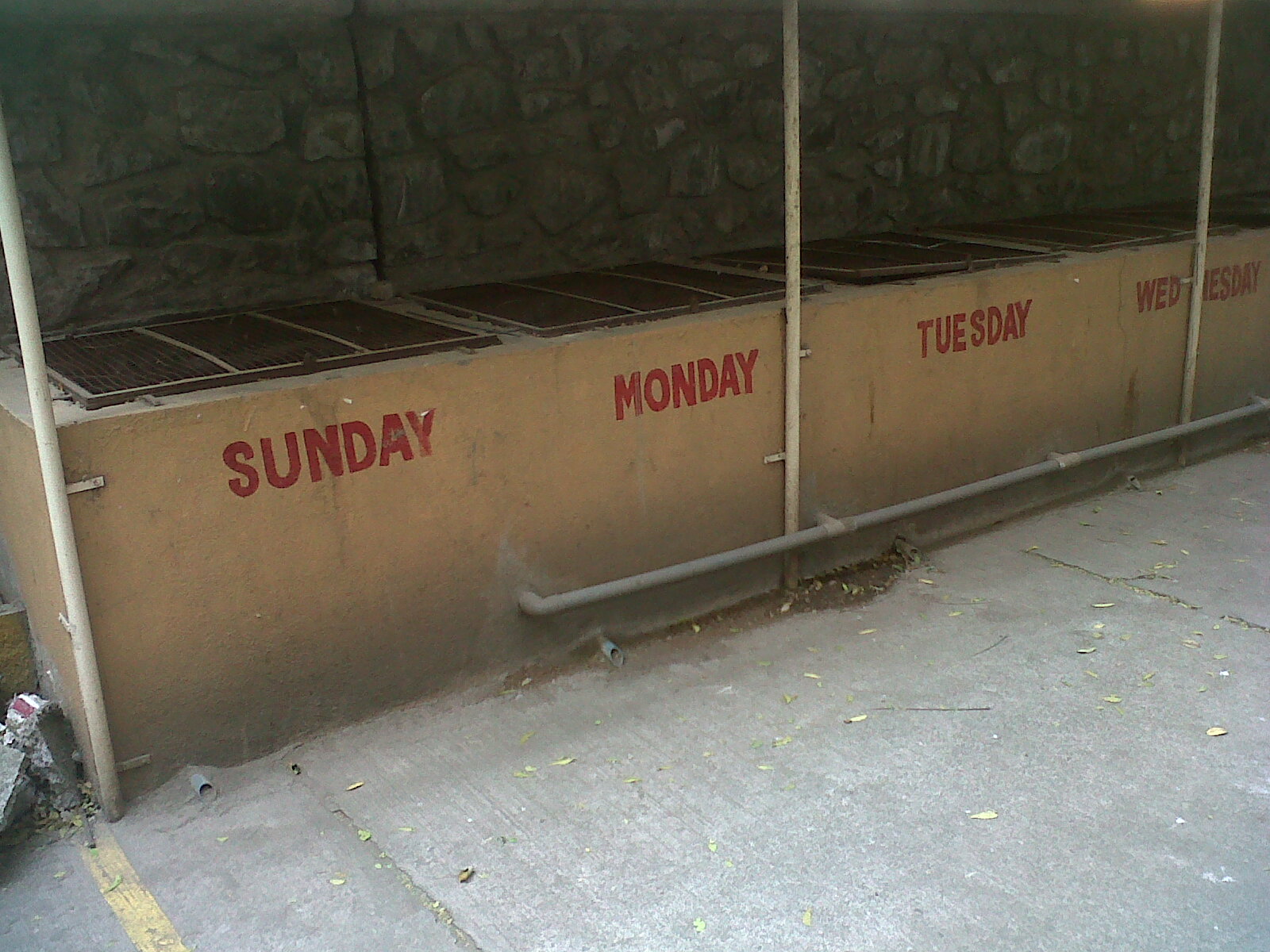
Ideal for mid-sized communities. Standard brick-and-mortar or precast concrete curing pits built to specific aeration drawings, utilizing our proprietary bacteria culture. Highly durable and zero maintenance.
Need a detailed site survey or layouts?
We provide free site visits in Pune.
Common Questions
Everything you need to know.
How long does the initial setup take?
Depending on the size of the system and whether civil work is required, initial setup can take anywhere from 2 weeks to 6 weeks. We provide a detailed timeline in our proposal after the site visit.
How often do you visit the site?
Our labour visits daily, between 11 AM and 2 PM, to process the wet waste collected by the society's housekeeping team. We also visit for periodic sieving and pest control as needed.
What happens to the finished compost?
The harvested compost is given back to the society — it can be used in the society garden, distributed to residents for their plants, or donated to local farmers and nurseries. It is high-quality, tested organic compost.
Do you handle the 5% tax rebate application?
Yes. We assist the society in applying for the 5% property tax rebate that many municipal corporations offer to societies that have active and compliant composting systems in place.
What makes your aerobic method better than Vermi composting?
Aerobic composting with bacteria culture is simpler to operate, more scalable, and does not depend on maintaining a population of earthworms. It handles large volumes of wet waste reliably and without the associated odour problems that plague most Vermi composting setups.
What is included in the service cost?
Our service includes daily labour for wet waste processing, the bacteria cultures required for composting, periodic sieving by a dedicated team, and pest control as needed. We provide a clear breakdown in the proposal.